Hello folks,
This page is dedicated to business-focused content, with regular updates on international relations and current affairs. If these topics interest you, make sure to subscribe and stay updated—you won’t want to miss what’s coming next.
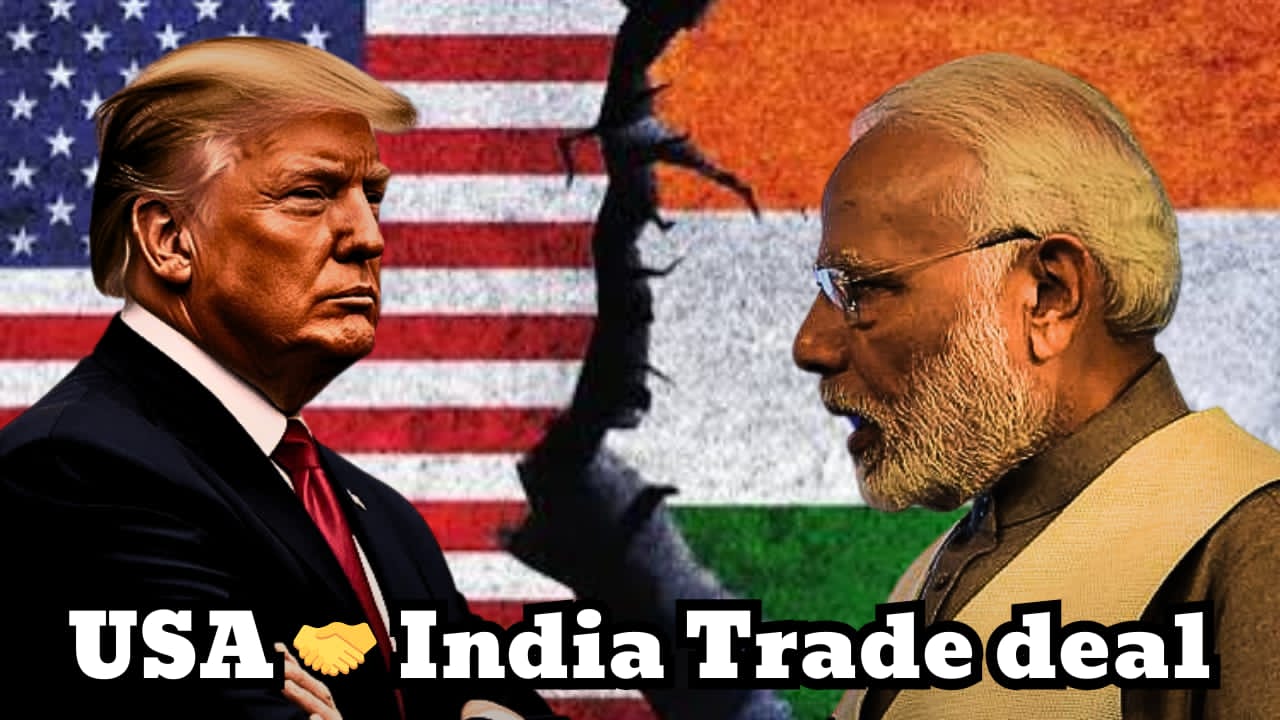
Most of us are already aware of the tariff tensions between India and the United States that have been ongoing for nearly a year now. Initially, tariffs stood at around 10%, which later increased to 25%, and eventually touched 50%. One of the major reasons behind this escalation was India’s continued purchase of oil from countries like Russia, despite global geopolitical pressures.
Although India is generally a net importer, it has consistently maintained a trade surplus with the U.S. Every year, India exports goods worth nearly $87 billion to the United States, contributing roughly 2.5% to India’s GDP. This heavy export dependence means that even small disruptions—such as higher tariffs or trade restrictions—can significantly impact multiple sectors. Industries like textiles, seafood, auto components, and IT services are particularly vulnerable.
After months of negotiations and prolonged debate, both countries finally reached a mutual agreement. As a result, tariffs were reduced to around 18%, which is relatively lower compared to what many other Asian countries are currently paying.
At first glance, this seems like a big win for India.
But here’s the catch.
While tariffs were reduced, India had to accept certain trade-offs. One of the most debated outcomes of this agreement is India allowing the import of DDGS (Distillers Dried Grains with Solubles) from the U.S. at a duty-free rate, though only in limited quantities.
This brings us to the real questions:
What exactly is DDGS?
Why is it important from an Indian perspective?
And what could be the long-term consequences?
What is DDGS?
DDGS is a protein-rich byproduct of ethanol production, derived mainly from genetically modified (GM) corn. It is widely used as animal feed, especially for cattle, because of its high nutritional value and relatively low cost.
Why is this controversial in India?
India has traditionally taken a cautious approach toward genetically modified crops. So far, GM cotton is the only genetically modified crop officially approved for cultivation in the country. Allowing DDGS imports, even indirectly, raises concerns that GM products are entering India through the “back door.”
Because of this, several opposition leaders and farmer groups have questioned the government’s decision, arguing that it could set a precedent for wider acceptance of GM crops without sufficient long-term studies.
Impact on dairy products
Research so far suggests that GM-based animal feed does not transfer foreign genes into milk. In fact, the European Union allows GM feed for dairy cattle, provided proper labeling is done when GM content exceeds 0.9%.
However, the real concern lies in the long-term effects. While current studies may not show immediate risks, the broader environmental, health, and economic implications of sustained GM feed usage are still not fully understood.
The bigger picture
This entire episode highlights a hard truth of global trade:
To gain something, a country often has to compromise elsewhere.
Tariff relief offers short-term economic stability, but decisions like allowing DDGS imports raise deeper questions about food security, farmer livelihoods, and regulatory consistency. Whether this trade-off proves beneficial or costly in the long run remains to be seen.